

The 3 AI Boom Risks Investors Can’t Ignore
June 8, 2026
The bearish case on AI is not that the technology is fake.
AI is real. It can write code, summarize documents, automate workflows, and help certain people become more productive.
The problem is whether the current AI investment boom makes economic sense at the scale investors are now pricing in.
For the last few years, the market treated AI like a simple story: spend heavily now, unlock massive productivity later, and justify the trillions flowing into chips, data centers, cloud infrastructure, and model development.
But that story is starting to change, and the risks are rising.
AI providers and enterprise customers are both discovering the same problem: AI is expensive to run at scale, hard to measure, and not always tied to real business output.
So while revenues are growing, costs are rising as well, often at an unsustainable pace.
That matters because today’s AI valuations are not pricing in a normal technology cycle. They are pricing in exponential growth, flawless execution, and a rapid path from massive spending to massive profits.
But demand risk, supply risk, and timing risk are all starting to appear at the same time.
The Demand Was Built on Subsidized Pricing
Much of the AI boom was built on subsidized usage.
OpenAI, Anthropic, and other model providers wanted adoption. They wanted users building habits, enterprises building workflows, and investors seeing explosive demand.
As tech giants have done before, they made AI feel cheap and predictable.
Flat subscriptions. Low-cost API access. Generous usage limits. Enterprise rollouts with few guardrails.
That created a powerful illusion.
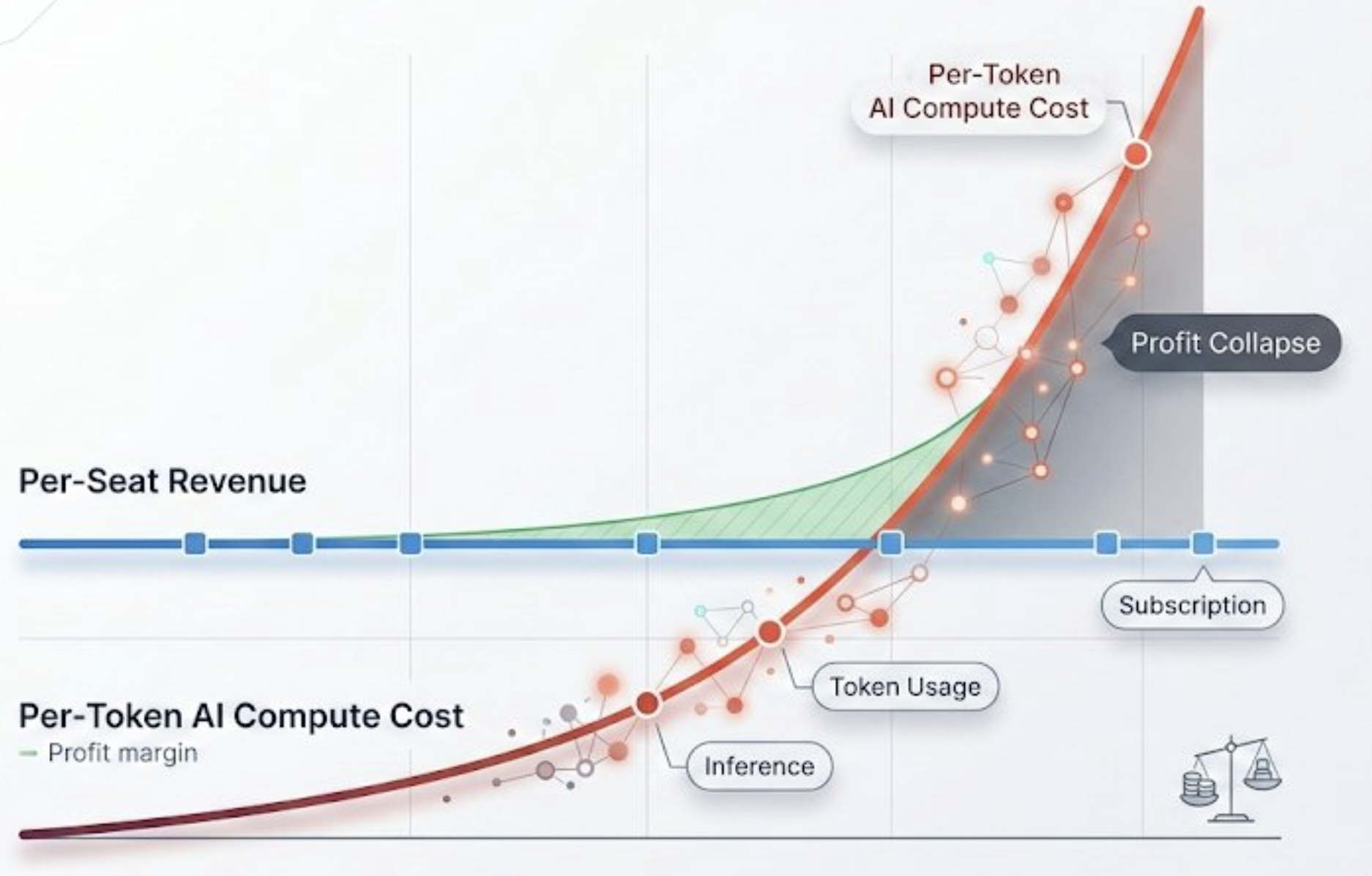
Demand looked massive because the price was artificially low. The usage was real, but the economics were hidden.
For a while, AI providers absorbed the cost. That worked while investor capital was flowing and the market rewarded growth over profitability.
But that model becomes harder to sustain as usage rises, token costs move higher, and losses mount.
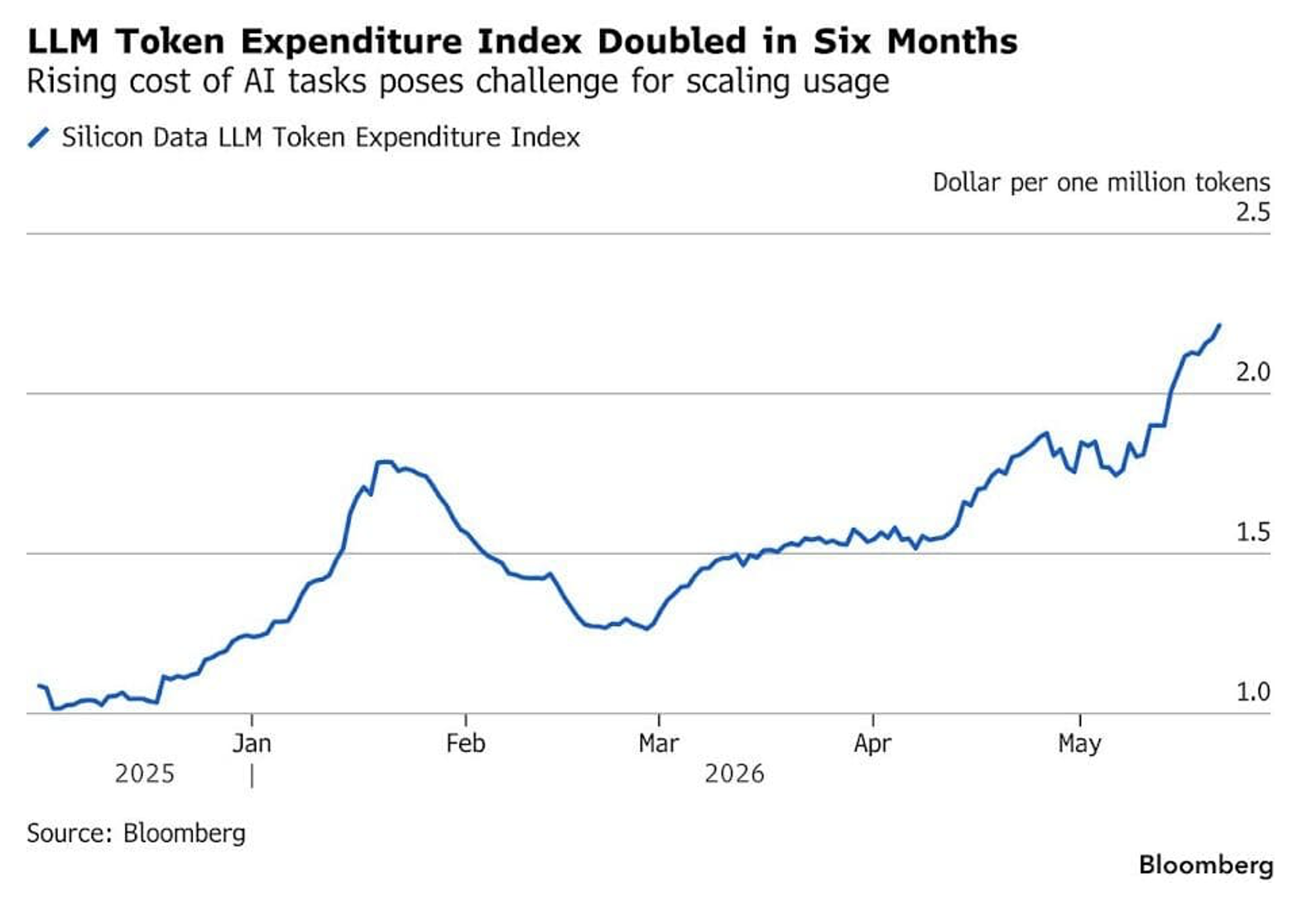
The LLM Token Expenditure Index has roughly doubled in six months, rising from around $1.00 per one million tokens to more than $2.00 per one million tokens.
That's the problem.
The industry created demand by making AI feel cheap. But the underlying cost of serving that demand has been rising.
That is why the industry is moving from flat-rate subscriptions to usage-based token pricing.
The subsidy is ending and customers are reacting.
GitHub Copilot users became angry when pricing shifted toward usage. Microsoft reportedly pulled back on internal Claude Code licenses. Uber capped AI coding-tool spending after burning through its annual budget in months. Walmart is curbing employee usage of proprietary AI tools because of soaring operating costs. And it’s rumored Amazon got stuck with a 1-month half a billion dollar bill after flat-rate subscriptions stopped.
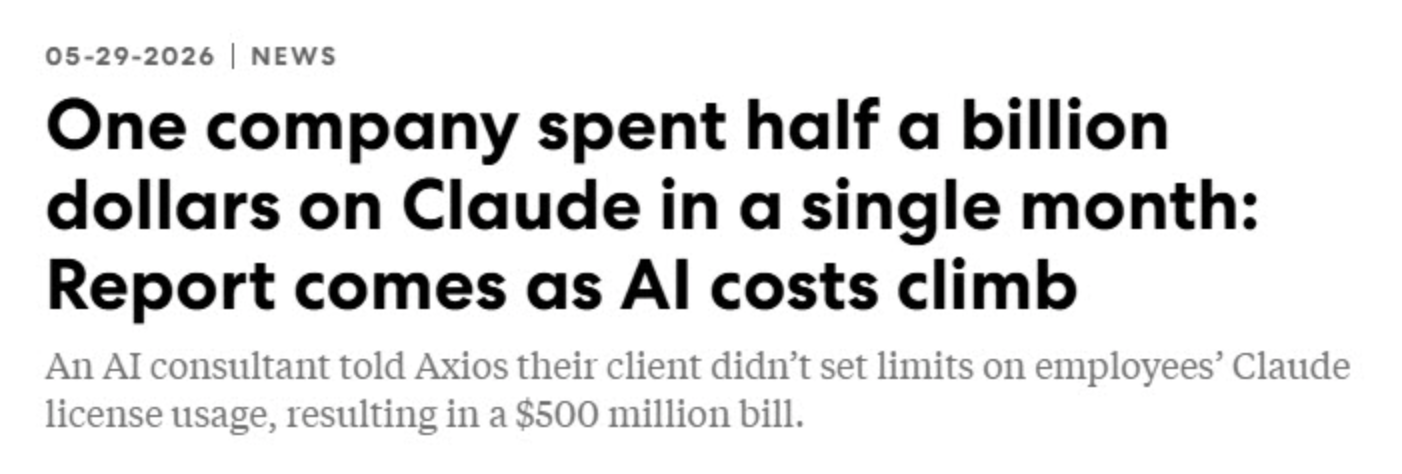
AI demand was created by the subsidy.
At a subsidized price, AI looked wildly popular. At the real economic price, usage gets capped, budgets get reviewed, workflows get questioned, and cheaper alternatives get tested.
The market saw explosive usage and assumed it proved durable demand.
Maybe it proved something narrower:
AI is easy to love when someone else is paying the bill.
AI Is Not a Software Seat. It's a Meter.
Traditional software is sold by the seat.
A company pays a predictable monthly amount per employee. That model is easy to budget and easy for investors to understand.
AI is different.
AI isn't a seat. It's a meter.
Every prompt, answer, file read, code review, retry, and autonomous agent loop consumes tokens. The more agentic the workflow becomes, the faster the meter spins.
That's why AI costs can explode even when usage looks healthy.
Uber is the clearest example.
The company gave thousands of engineers access to advanced AI coding tools. Usage surged. AI-generated code increased. On the surface, this looked bullish.
Then the bill arrived.
Uber reportedly burned through its annual AI coding-tools budget in the first four months of the year. Some engineers were generating hundreds or thousands of dollars per month in token costs.
The important point is not just that the spending was high. It is that Uber could not clearly connect the rising AI spend to better products for customers.
That shifts the question from:
“How much AI are we using?”
to:
“What are we getting for the money?”
That is the first crack in the AI story.
Cheaper AI Can Destroy Pricing Power
The AI labs want investors to believe the best models will command premium pricing.
That works if the best models are dramatically better than everything else.
But that gap is narrowing.
And cheaper AI can also destroy pricing power.
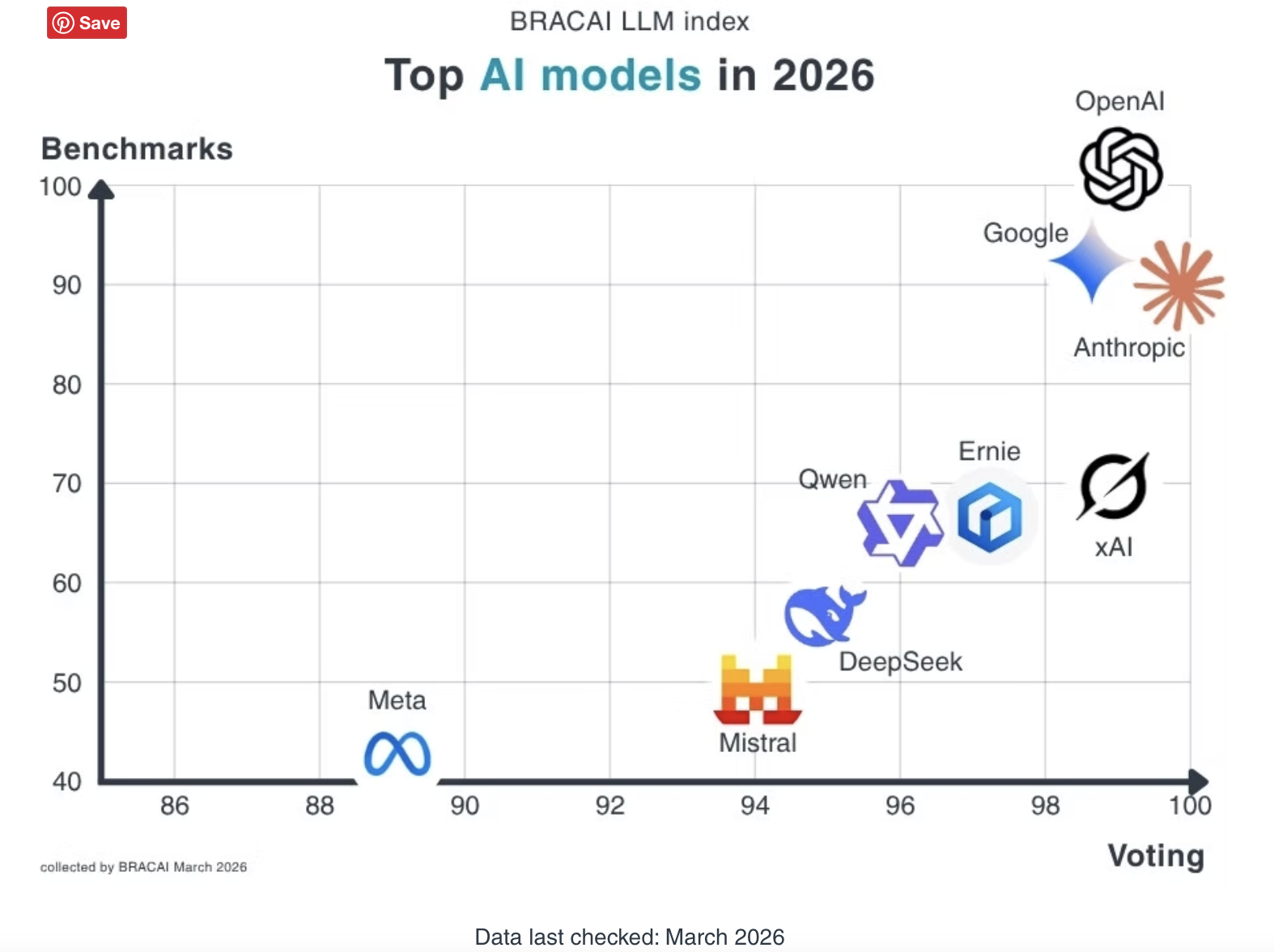
The chart shows OpenAI, Google, and Anthropic clustered near the top. But it also shows competitors like xAI, Qwen, Ernie, DeepSeek, and Mistral moving into the same conversation.
That matters because the performance gap is narrowing while the price gap can be enormous.
Premium AI labs want customers to pay for the best model. But many lower-cost and open-source models are already good enough for routine business tasks at a fraction of the cost.
A company summarizing documents, drafting emails, classifying support tickets, reviewing basic code, or cleaning spreadsheets does not always need OpenAI’s best model or Anthropic’s best model.
It needs a good enough answer at the best possible price.
That opens the door for a “Priceline for AI,” a middleman that sits between the customer and the AI models. The customer asks a question. The middleman analyzes the task and decides what level of intelligence is required.
Simple task? Send it to a cheap open-source model.
Medium task? Send it to a lower-cost commercial model.
Hard task? Only then use the expensive frontier model.
The customer does not care which model answers the question. The customer cares about getting the right answer at the lowest price.
That changes the business.
OpenAI, Anthropic, Google, Meta, Mistral, DeepSeek, Qwen, and open-source providers all compete to answer the same query. The middleman routes the job to whoever can deliver the needed answer at the best price.
That is great for customers.
It is dangerous for AI companies.
Once the brand disappears behind a routing layer, AI becomes a bidding market. Bidding markets usually drive prices lower.
The bull case assumes massive AI usage will create massive revenue.
But if AI becomes a commodity, usage can grow while revenue per query falls.
Cheaper AI may help adoption.
It can also destroy margins.
Adoption May Be Slowing as Pricing Discipline Begins
One way investors have been tracking AI demand is by looking at developer adoption.
If coding assistants are spreading quickly, the logic goes, then AI usage is becoming embedded inside real workflows.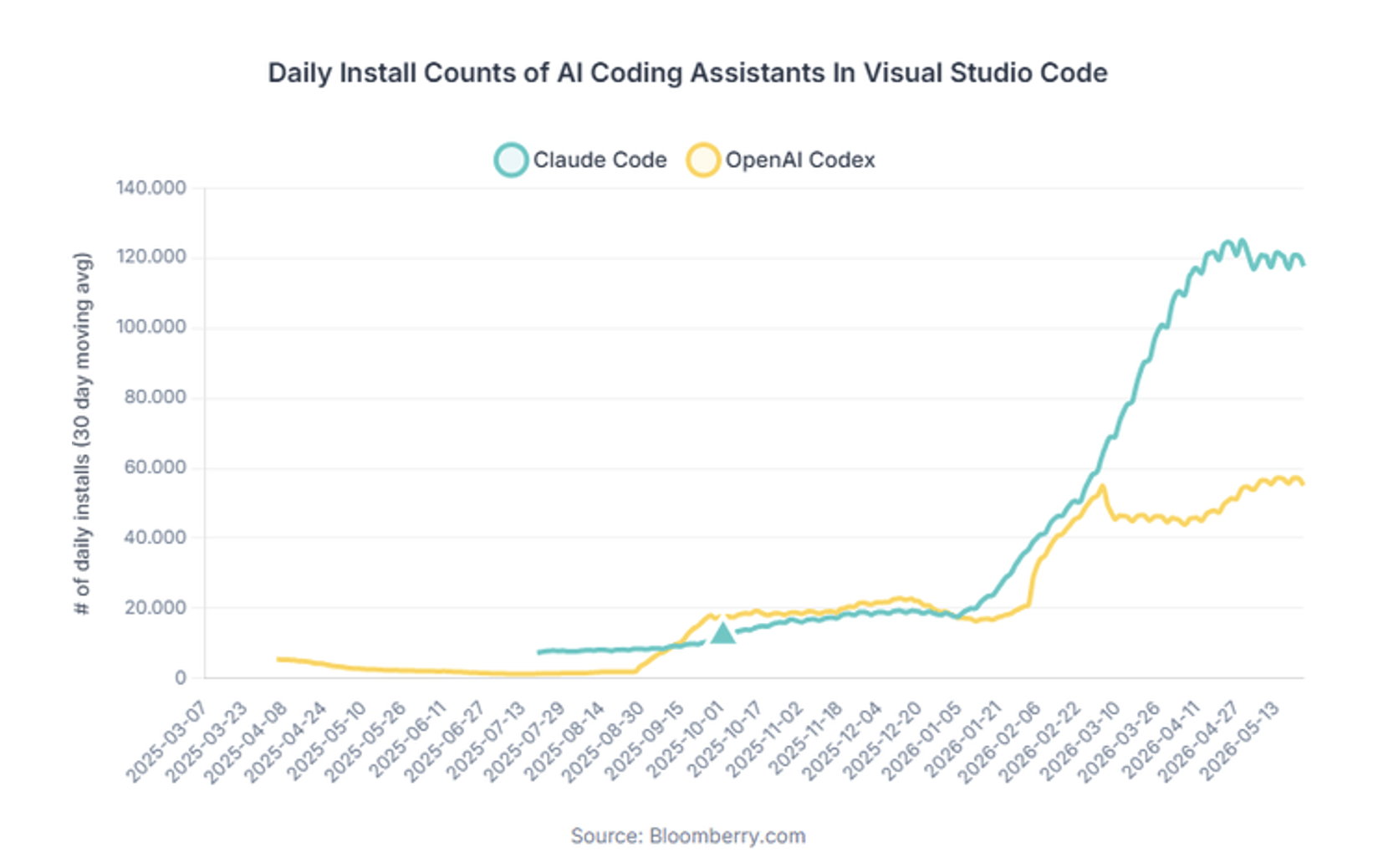
Coding assistant installs have surged over the last year, but the curve appears to be plateauing.
That does not mean AI adoption is over.
It does challenge the idea that every AI demand curve goes straight up forever.
This is happening just as companies are adding caps, approval workflows, usage dashboards, and ROI reviews.
During the hype phase, usage was enough. If employees used AI, investors cheered. If token consumption rose, the market saw growth.
The next phase is different.
Now investors need to know whether AI reduces costs, increases revenue, improves margins, and creates measurable business value after token costs, rework, governance, infrastructure, and capital spending.
That is a much harder test.
The AI Revenue Loop Looks Circular
The AI ecosystem has a circular financing problem.
Hyperscalers invest billions into AI model companies.
Those AI companies commit to spending billions back on hyperscaler cloud infrastructure.
The hyperscaler books cloud revenue.
The AI lab reports growth.
The valuation goes up.
The higher valuation supports more investment.
Then the cycle repeats.
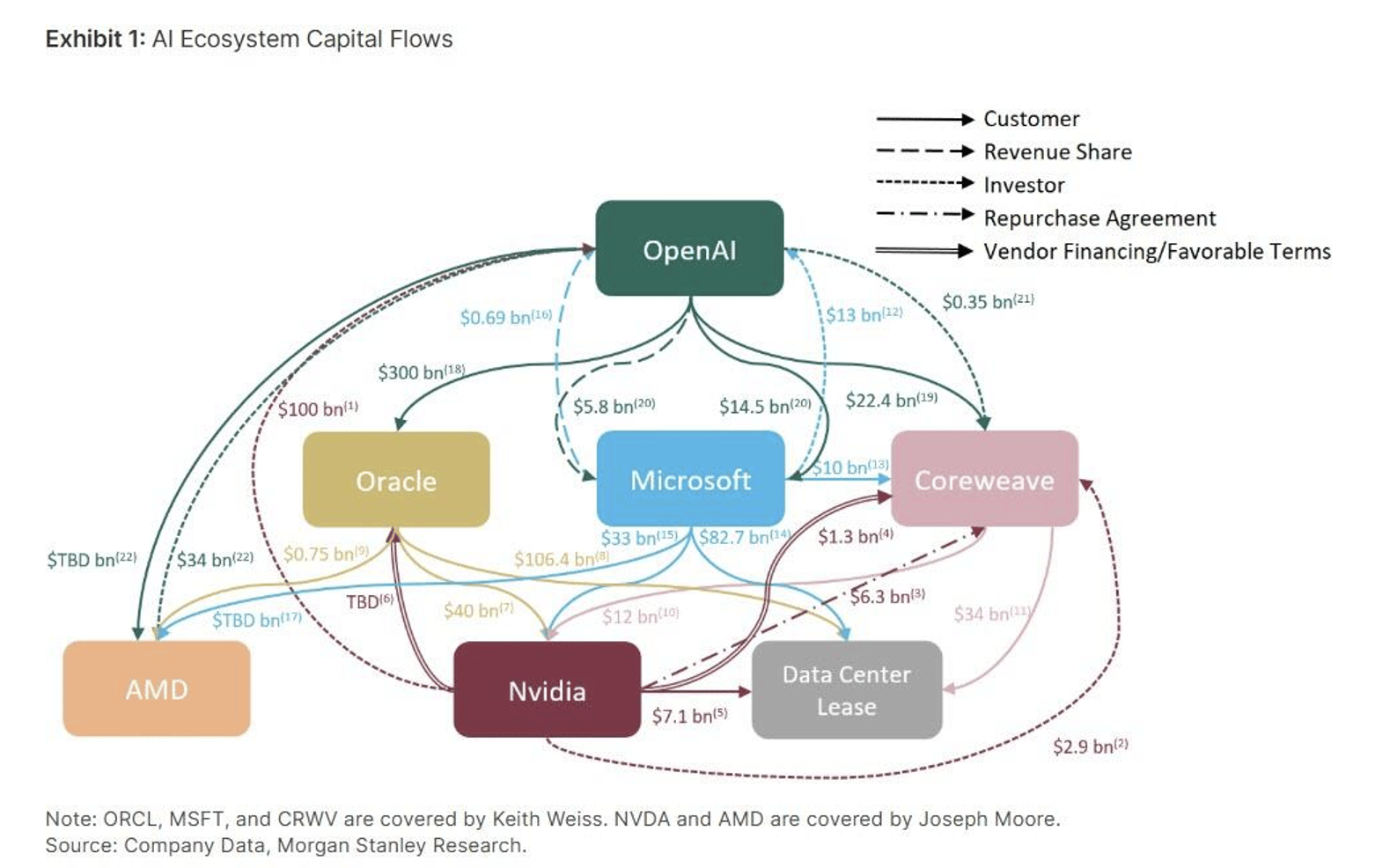
On paper, this looks like demand.
But some of it may be vendor-financed demand.
The compute is real. The workloads are real. The cloud bills are real.
But the quality and durability of the revenue are open questions.
If AI labs need constant funding rounds to pay hyperscalers, and hyperscalers are also the investors supporting those labs, the system depends on capital continuing to flow.
That is risky.
Hyperscaler Demand Very Concentrated
A normal cloud business has thousands of customers across industries.
A concentrated AI backlog tied to a handful of model companies is different.
If those model companies keep raising money, the commitments look strong.
If funding slows, enterprise demand disappoints, token usage gets capped, or pricing comes under pressure, those commitments become more fragile.
That is the hidden risk in the hyperscalers.
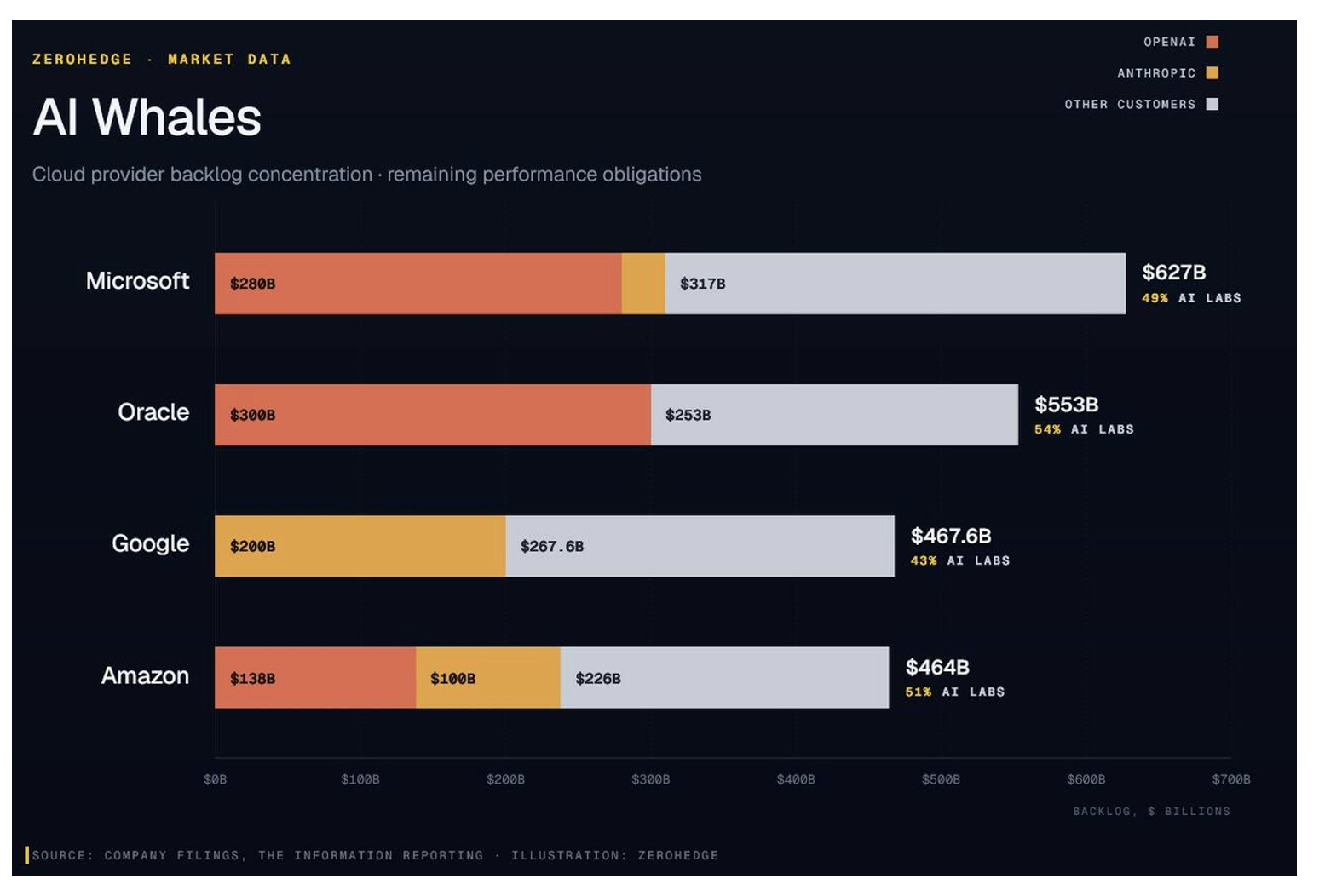
They are funding the miners, selling them the shovels, booking the shovel revenue, and using that revenue to justify building more shovel factories.
That can work for a while.
But eventually, the miners have to find gold.
In this case, OpenAI, Anthropic, and the other AI labs must turn massive compute spending into durable profits for themselves and measurable productivity gains for their customers, not just higher valuations and bigger funding rounds.
If they cannot, the cloud revenue, data center buildout, and capex assumptions supporting today’s hyperscaler valuations become much harder to defend.
The market is pricing in exponential growth.
But if the circular revenue loop slows, those valuations can come down fast.
The AI Boom Is Becoming a Credit Story
The AI story is no longer just about tech stocks.
It is becoming a credit story.
Morgan Stanley estimates that global data center capex could reach roughly $2.9 trillion by 2028. A large portion is expected to come from corporate debt, securitized debt, and private credit.
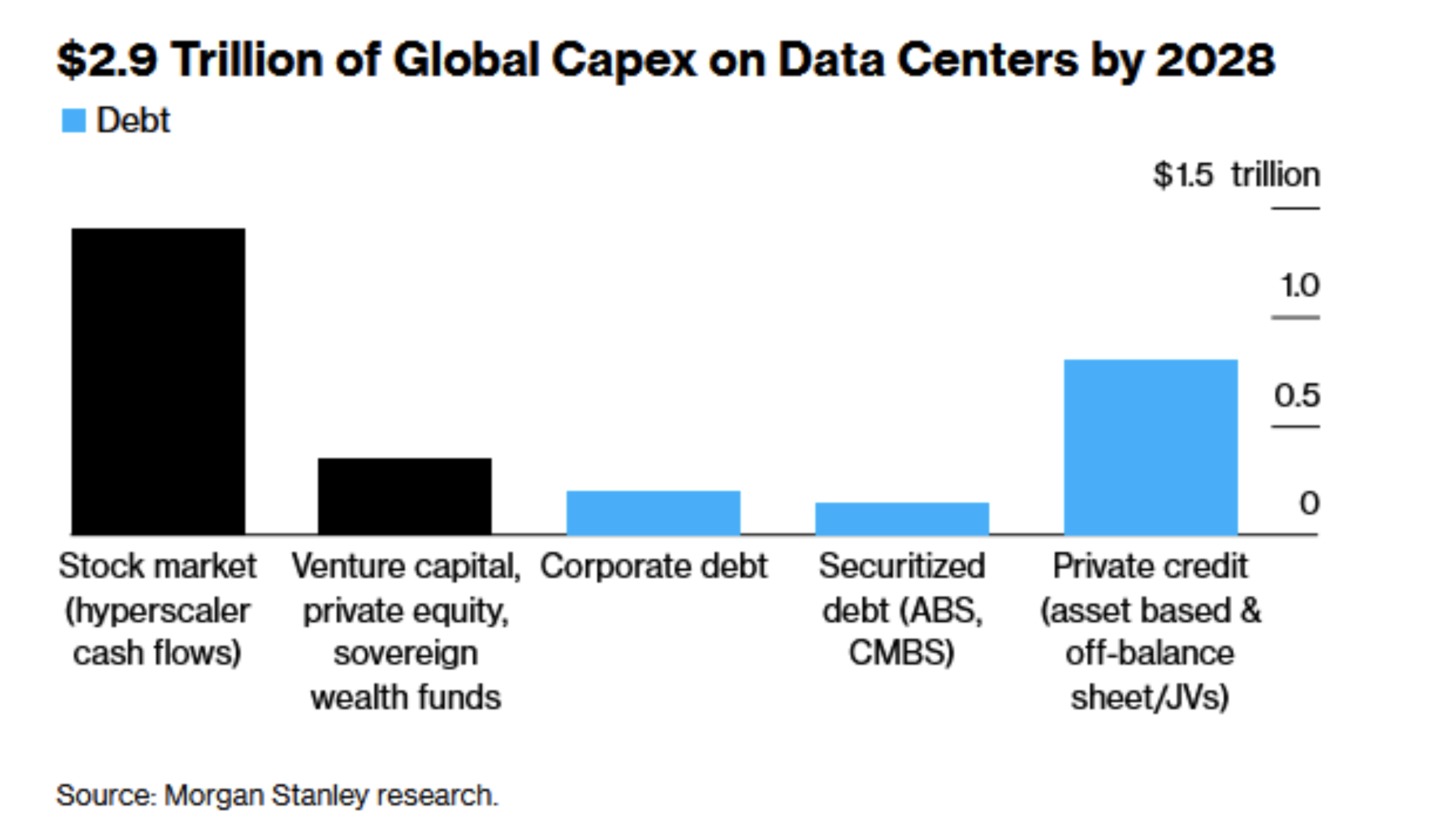
That changes the risk profile.
Meta’s reported $30 billion AI infrastructure financing through a special purpose vehicle (SPV) is a good example. On paper, it helps fund the buildout without putting the full debt burden directly on Meta’s balance sheet.
But off-balance-sheet does not mean risk-free.
SPVs, joint ventures, asset-backed financing, private credit, and securitized debt can make the buildout look cleaner than it really is. They shift the appearance of risk without eliminating the risk.
The dot-com bubble was largely financed with equity. This AI boom is increasingly financed with debt.
That matters.
If the economics disappoint, the risk does not stay inside tech stocks. It can spread into credit portfolios, bond funds, private credit vehicles, pensions, insurance products, and retirement accounts.
That is how speculative growth stories become systemic financial stories, where credit risk starts to matter more than the AI narrative itself.
AI Also Has a Supply Problem
The demand side is already under pressure.
But AI has a supply problem too.
AI does not scale like software. It requires data centers, GPUs, transformers, substations, transmission lines, cooling, water, permits, and enormous amounts of electricity.
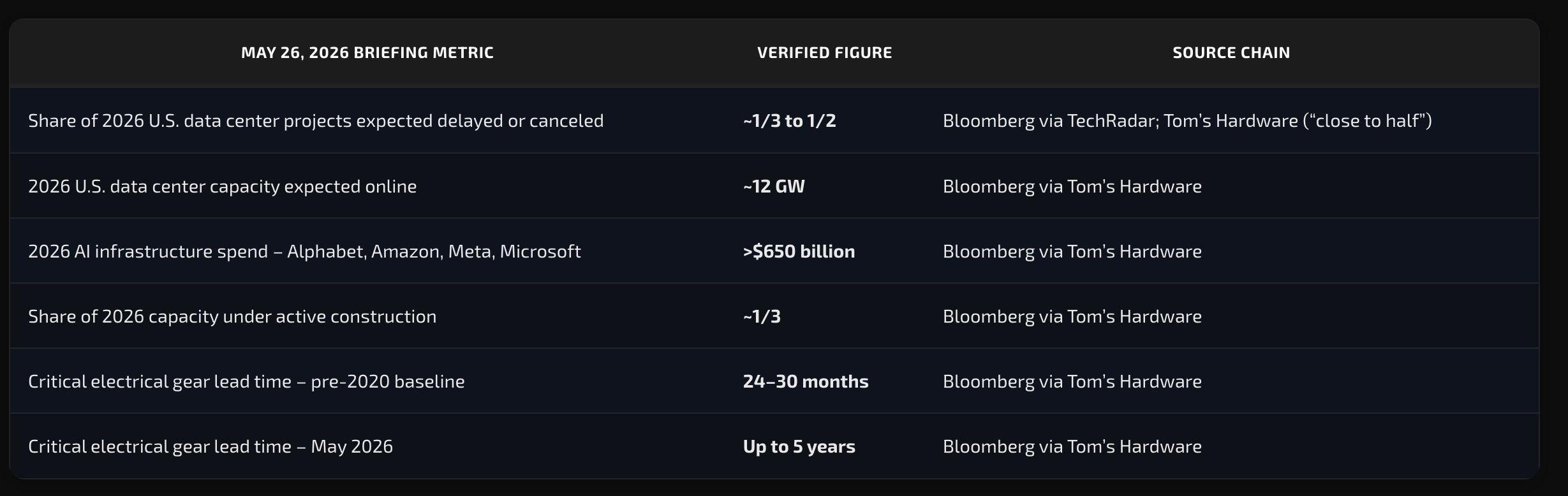
The chart shows the bottleneck clearly.
Roughly one-third to one-half of 2026 U.S. data center projects are expected to be delayed or canceled.
Only about 12 GW of U.S. data center capacity is expected online in 2026, and only about one-third of that capacity is under active construction.
At the same time, Alphabet, Amazon, Meta, and Microsoft are expected to spend more than $650 billion on AI infrastructure in 2026.
So the industry is spending at software speed, but building at infrastructure speed.
The biggest constraint is power.
Before 2020, critical electrical gear took roughly 24 to 30 months to procure. By May 2026, lead times had stretched to as much as five years.
That means money alone cannot solve the bottleneck. A planned 1GW campus still needs equipment, grid connections, permits, and power before it becomes a fully functioning AI factory.
Meanwhile, the debt clock keeps ticking.
Interest payments do not wait for permits, grid upgrades, or customers to prove ROI.
That is not a software scaling curve.
It is a physical bottleneck attached to a multi-trillion-dollar financial clock, supporting valuations that assume everything goes right.
The Bottomline
AI may still change the world.
But changing the world is not the same as justifying every valuation attached to the boom.
That is the risk investors may be missing.
Today’s AI valuations are priced for exponential growth. But the industry now faces three problems at once: demand risk, supply risk, and timing risk.
Demand may be weaker than the usage numbers suggested because much of that usage was subsidized.
Supply may be harder to build than expected because data centers need power, permits, transformers, grid connections, and capital.
Timing may be the biggest risk of all because the debt clock is already ticking, while the profits needed to justify the buildout may still be years away.
AI can be useful, powerful, and widely adopted while still becoming competitive, margin-sensitive, expensive to scale, physically constrained, and debt-funded.
That would still be a major technological shift.
But it would not support a market priced for flawless execution, endless demand, falling costs, unlimited power, and exponential profits.
The bearish case is not that AI disappears.
The bearish case is that AI becomes normal technology.
Important.
Useful.
Everywhere.
But not scarce enough, profitable enough, or financially clean enough to justify the price investors are paying for the dream.

Information contained in any email and this website maintained by OptionsGeek, LLC (“OptionsGeek”) are provided for educational purposes only and are neither an offer nor a recommendation to buy or sell any security, options on equities or indices, or cryptocurrency. OptionsGeek and its affiliates may hold a position in any of the companies mentioned. OptionsGeek is neither a registered investment adviser nor a broker-dealer and does not provide customized or personalized recommendations. Any one-on-one coaching or similar products or services offered by or through OptionsGeek does not provide or constitute personal advice, does not take into consideration and is not based on the unique or specific needs, objectives or financial circumstances of any person, and is intended for educational purposes only. Past performance is not necessarily indicative of future results. No trading strategy is risk free. Trading and investing involve substantial risk, and you may lose the entire amount of your principal investment or more. You should trade or invest only “risk capital” - money you can afford to lose. Trading and investing is not appropriate for everyone. We urge you to conduct your own research and due diligence and obtain professional advice from your personal financial adviser or investment broker before making any investment decision.
Copyright 2026 OptionsGeek, LLC, all rights reserved.