
SIGN UP for Trade Ideas, Tools, & Training ↑

How Options Market Makers Make Money: 5 Invisible Costs Traders Miss
A former $4 billion hedge fund trader and Wall Street options market maker reveals five hidden costs that can quietly drain money from options trades.
For years, I worked as an upstairs options market maker at a major investment bank, trading with some of the largest hedge funds on Wall Street.
Then I crossed the street and joined a hedge fund that had grown past $3 billion and was on its way toward $4 billion.
As the fund grew, its options trades grew with it. What might once have been a 1,000-contract order became a 10,000-contract order, and small differences in execution suddenly mattered a lot more.
Give up just $0.10 on 10,000 contracts and you have given away $100,000 on one trade.
1,000 CONTRACTS
$0.10 Price Difference
Cost = $10,000
10,000 CONTRACTS
$0.10 Price Difference
Cost = $100,000
Part of my job became finding those small leaks and protecting the fund from them.
I started calling them Invisible Costs.
That experience made me wonder:
If a sophisticated hedge fund had Invisible Costs worth paying attention to, what Invisible Costs were individual options traders paying without even realizing it?
That question is what originally led me to write this article.
Here are the Top 5 Invisible Costs.
INVISIBLE COST
1. ITM Options
In-the-money options can create one of the easiest Invisible Costs to overlook: bad execution.
As an option moves deeper in-the-money, the quoted bid-ask spread can become wider. That matters because traders often become less price-sensitive at exactly the wrong time.
Suppose you bought a call for $1 and the stock rallies. The option is now worth around $5. You are sitting on a large profit, so giving up another $0.10 to sell it may not feel important. You made money. What is another dime?
The opposite can happen when a trade is going against you. Fear takes over and the only thought becomes, just get me out.
Both situations can lead to the same mistake: you stop caring about the price you receive.
Imagine the option is quoted $4.50 bid / $4.90 offer. If you want to sell, you know you can probably hit the $4.50 bid immediately.
But that does not mean $4.50 is the best price available.
That difference is where the Invisible Cost can hide.
What Can You Do?
Start by remembering that the displayed bid and offer are not instructions.
When market conditions allow, use limit orders and work your price rather than automatically crossing a wide spread.
You should also have another reference point for what the option may be worth. One useful measure is Theoretical Value, an estimate of an option’s true value.
Theoretical Value does not guarantee that someone will trade with you at that exact price. But it can give you a better sense of where a reasonable price may be.
The OptionsGeek Strike Selector provides Theoretical Values for this reason. If an ITM option has a wide market, you can compare the bid, offer, midpoint and Theoretical Value before deciding what price you are willing to accept. A good start is $0.05 around the Theoretical Value price.
The lesson: When an ITM option has a wide market, do not give away money simply because you are excited to take a profit or desperate to get out.
INVISIBLE COST
2. Dividends
For decades, options market makers have profited from investors who do not understand the relationship between call options and stock dividends.
There is a very specific trade built around investors who fail to exercise call options before a dividend when they should. These "dividend trades" can produce millions of dollars in profits for professionals, sometimes overnight.
Let me be clear: not every call option should be exercised.
But if you fail to exercise a call when it should be exercised, the cost can be very real.
For example, assume you own 10 call options that should be exercised ahead of a $0.60 stock dividend. If you hold the options overnight and fail to exercise them, you can lose:
10 contracts × 100 multiplier × $0.60 dividend = $600
Who profits?
The options market makers doing these "dividend trades" capture most of it with very little risk.
What Can You Do?
First, it is unlikely to see an ATM or OTM call option exercised. Usually, it is only deep-ITM call options that get exercised.
Second, if it looks like an exercise situation, you do not have to exercise. You can simply sell to close the position.
The easiest way to get a quick sense of whether a call should be exercised before an ex-dividend date is to look at its Delta.
If the Delta is in the high 90s on the dividend date, the market is signaling an exercise situation.
A more precise way to make the decision is to look at the remaining time value in the option and compare it with the dividend.
If the dividend is greater than the remaining time value, the call will generally make economic sense to exercise.
For example, if a call has $0.20 of time value remaining and the stock is about to pay a $0.60 dividend, you are potentially giving up $0.60 to protect $0.20 by keeping the call.
That's a losing proposition.
So before a stock goes ex-dividend, do not just look at whether your call is profitable. Check the Delta, remaining time value and dividend to determine whether you should hold, sell, or exercise your calls.
INVISIBLE COST
3. Choosing the Strike Price
One of the biggest mistakes options traders make is assuming that if a trade makes money, it must have been the right trade. That is not necessarily true. You can make money on an option and still have chosen the wrong option.
The way to gain an advantage in a probability game is through a concept called Mathematical Edge, or simply Edge. Edge is a way to measure the risk-reward in a decision-making process.
Think about a fair coin flip. If heads pays you $10 and tails costs you $20, the probability of winning is still 50%. You may get lucky and win several flips in a row, but the game itself is bad because the payoff is working against you.
There is no Edge in that coin flip game. If you keep playing long enough, you will lose money. It is mathematically guaranteed.
The same principle applies when choosing an option. A profitable outcome does not automatically mean the trade offered good risk-reward when you entered it. You may have made money despite choosing a poor option, just as you can win several bad coin flips in a row.
What Can You Do?
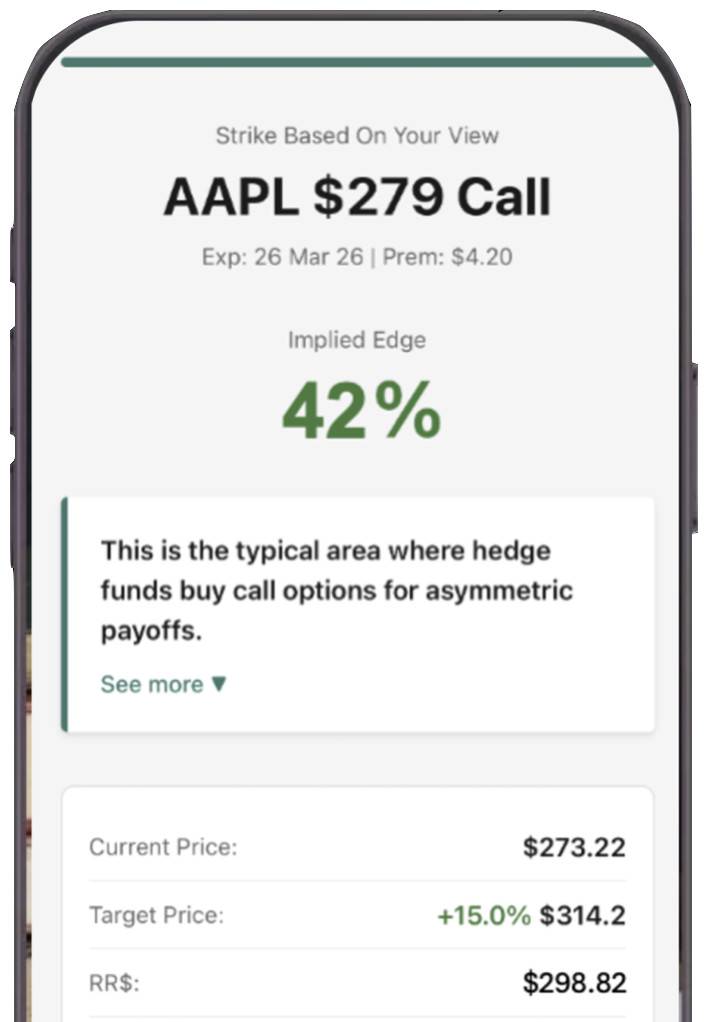
Before choosing to buy an option, define your stock view: target price, time frame, and confidence level. Then compare the available options and determine which strike gives you the best risk-reward for that view.
The OptionsGeek Strike Selector makes that process easier. It takes your stock view and helps identify the option with the strongest Edge.
The goal is not simply to find an option that can make money. It is to find the option where the risk-reward has shifted in your favor.
STRIKE SELECTOR
INVISIBLE COST
4. Max Pain
Max Pain is the idea that a stock may gravitate toward the strike price where the greatest number of options expire worthless.
And sometimes stocks really do seem to get “pinned” around a particular strike as expiration approaches.
The problem is that simply looking at Open Interest does not tell you enough.
A strike may have enormous Open Interest, but you still do not know how those positions were created.
Were the options originally bought or sold?
When were the trades made?
Where was the stock trading at the time?
Were the options part of a spread or another larger position?
And are those positions even still open?
Those details matter because two strikes can show identical Open Interest while representing completely different positioning.
What Can You Do?
Treat Open Interest as the beginning of the investigation, not the answer.
To really understand whether a stock may be setting up for a pin, you need to go back through the historical options activity and determine what actually traded, when it traded, and whether the initiating trade was buying or selling.
That last part is especially important.
The more accurately you can reconstruct how the positions were established, the better chance you have of understanding what all that Open Interest actually means.
Simply finding the strike with the largest number of open contracts and calling it “Max Pain” is not enough.
If you want to understand a potential pin, you have to understand the trades behind the Open Interest.
INVISIBLE COST
5. The Herd Effect
Market makers have one enormous advantage over the individual trader: they can see the behavior of the crowd.
You see your trade. They see thousands of trades.
Over time, that gives them a much better picture of when traders tend to buy, how aggressively they buy, how long they tend to hold, when they take profits, and when fear causes them to rush for the exits.
In other words, the individual trader sees one trade. The market maker sees the herd.
That matters because crowds tend to behave predictably. Traders often pile into the same names at the same time, chase the same moves, and then react in similar ways when the trade starts moving against them.
Market makers do not need to know what you are going to do. They only need to understand what the crowd is likely to do.
The Invisible Cost is that herd mentality can create volatile situations that raise emotions and adversely affect your trading decisions.
You may chase a move, get shaken out too early, or sell in a panic with everyone else.
What Can You Do?
You are not going to outsmart firms with vastly more data, technology, and visibility into aggregate order flow.
So stop trying to beat them at their game.
Instead, control your own behavior.
Have a plan for entering, profit-taking and risk before the trade starts, so you are less likely to become part of the same predictable exit wave later.
Decide what would make you take profits, what would make you cut the trade, and how long you are willing to wait for the catalyst to play out.
The more decisions you make before emotion takes over, the less predictable your behavior becomes.
The goal is to avoid becoming part of the herd they already understand.
The Bottom Line
Options market makers are very good at what they do. They understand pricing, execution, positioning, and trader behavior at a level most individual investors never will.
On top of that, they have some of the best execution technology in the world.
So there is no need to try to beat them at their game.
You need to get better at yours.
That means paying attention to execution, understanding when dividends matter, choosing options with positive Edge, looking beyond simple Open Interest, and having a plan before emotion takes over.
Each of these Invisible Costs may seem small on its own. But over hundreds of trades, small mistakes can add up.
The goal is simple: keep more of the Edge you worked so hard to find.
If you enjoyed this article, consider Winning Picks Premium.
It not only gives you high-quality options trade ideas, but also groundbreaking education designed to teach you how to think about options like a top hedge fund manager.
About the Author
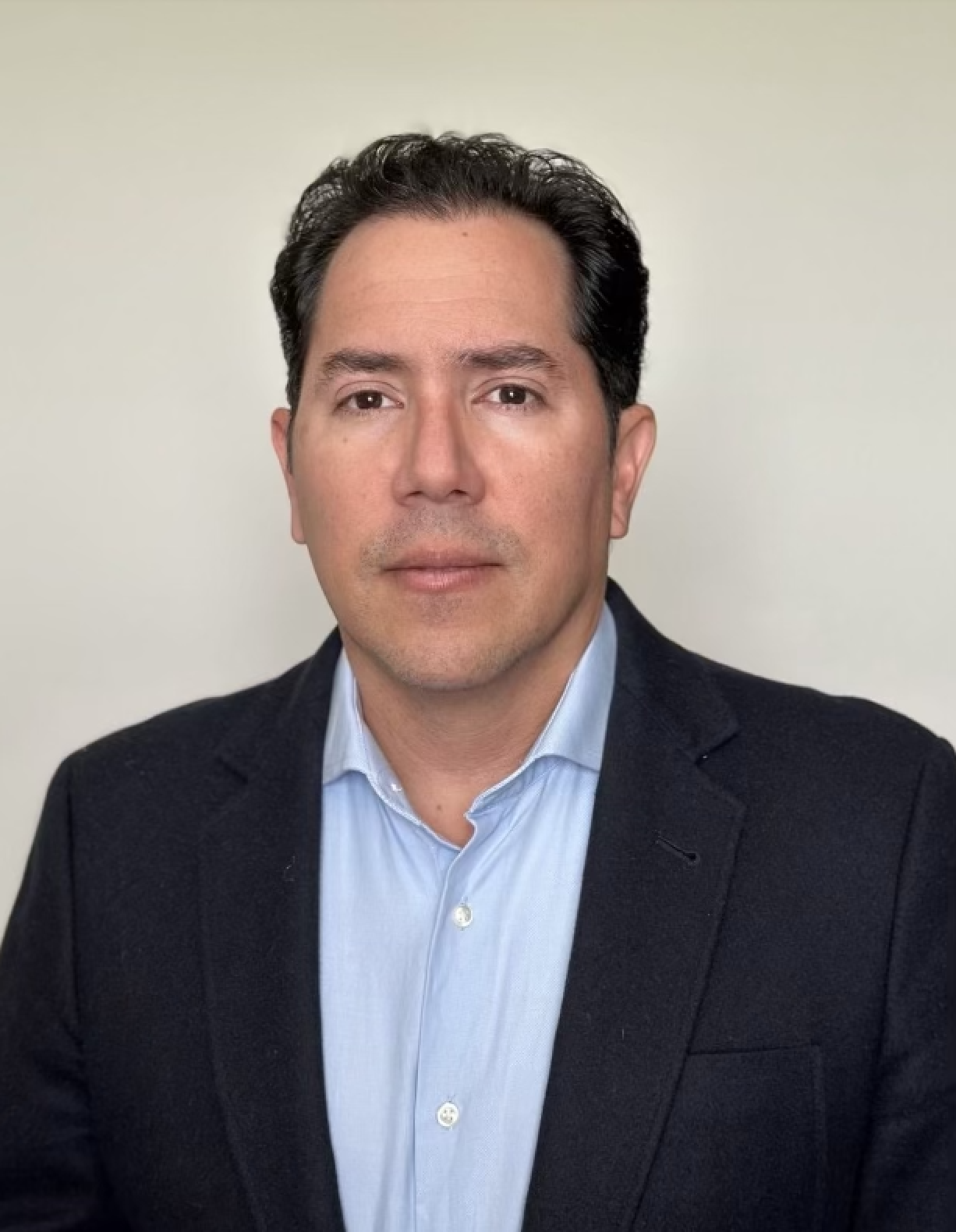
Felix Frey
Felix Frey is a Wharton graduate and 20-year Wall Street veteran who worked alongside top hedge fund managers. He now teaches investors how to approach options using a professional framework for identifying high-quality trade ideas and asymmetric opportunities, supported by a patented tool that simplifies option selection.


Information contained in any email and this website maintained by OptionsGeek, LLC (“OptionsGeek”) are provided for educational purposes only and are neither an offer nor a recommendation to buy or sell any security, options on equities or indices, or cryptocurrency. OptionsGeek and its affiliates may hold a position in any of the companies mentioned. OptionsGeek is neither a registered investment adviser nor a broker-dealer and does not provide customized or personalized recommendations. Any one-on-one coaching or similar products or services offered by or through OptionsGeek does not provide or constitute personal advice, does not take into consideration and is not based on the unique or specific needs, objectives or financial circumstances of any person, and is intended for educational purposes only. Past performance is not necessarily indicative of future results. No trading strategy is risk free. Trading and investing involve substantial risk, and you may lose the entire amount of your principal investment or more. You should trade or invest only “risk capital” - money you can afford to lose. Trading and investing is not appropriate for everyone. We urge you to conduct your own research and due diligence and obtain professional advice from your personal financial adviser or investment broker before making any investment decision.
Copyright 2026 OptionsGeek, LLC, all rights reserved.